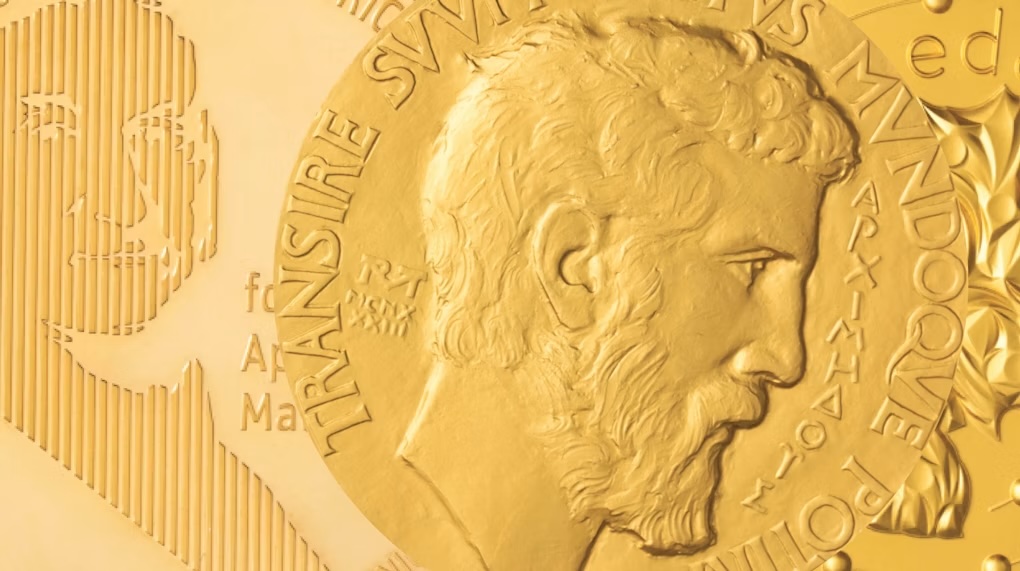
Last week the Fields Medals were announced at the International Congress of Mathematicians in Philadelphia. Awarded every four years, they are the pinnacle prize in mathematics. This year, as the Simons Foundation reported, the medals went to four of the world’s top mathematicians: Yu Deng, a Chinese mathematician at the University of Chicago; John Pardon, an American at Stony Brook University in New York; Jacob Tsimerman, a Canadian at the University of Toronto; and Hong Wang, a Chinese mathematician at New York University and France’s Institut des Hautes Études Scientifiques (IHES). As in earlier years, I have read the coverage, not so much for what they have done, but for how they have done it. This time I have been looking for the connections to play.
In my last post, I wrote about Dewey’s argument that play is not the opposite of work. The difference is only where the emphasis falls: play on the doing, work on the result. Both are done for their own sake. That made me curious about the people who reach the very top of the field. What do they value? Is play the opposite of ambition?
Hong Wang
Hong Wang, only the third woman to win the Fields Medal, was honoured for her work in harmonic analysis and geometric measure theory. (Plus and Quanta Magazine write very readable introductions to the Kakeya conjecture in three dimensions, which Wang proved with Joshua Zahl).
Wang describes mathematics, the Simons Foundation notes, as a way to understand the world. Her journey into mathematics was somewhat non-linear. She did not win the single place reserved at Peking University in mathematics for students from her province, so she enrolled as an earth science major, hoping to transfer to mathematics once there. Later she moved to the École Polytechnique in France, studying architecture for a semester. But she was drawn back to mathematics. This time, as she told Quanta Magazine, “I decided not to worry about whether I would be good or not and just work on understanding better.”
Working to understand rather than to prove herself also changed how the long, often fruitless stretches felt. In a 2025 interview with the CRM, Wang said, “It’s a long journey. Sometimes you work for years and don’t solve the problem. But the tools, the intuition, what you build along the way, it all ends up useful,” and she called the process “very rewarding.” Quanta Magazine also notes that Wang never took the time to celebrate her landmark proof. Asked about her results, she said “each time it just felt lucky”. From these quotes, at least, Wang looks to value the process more so than the result.
Jacob Tsimerman
From profile pieces, Jacob Tsimerman seems the opposite of Wang. He comes across as loud, competitive and ambitious — focused on the result. Tsimerman was recognised for his work in arithmetic geometry, centred on the proof of the André-Oort conjecture. By his own account in Quanta Magazine, he had let himself become obsessed with winning the Fields Medal, sacrificing enjoyment to try to win it. He also describes mathematics as a goal-oriented endeavour: “The truth-and-beauty stuff is there when you’re zoomed out, but when you’re zoomed in, you just want to win.”
But he also acknowledges, in Be Giant, that the rewards of results come very rarely, and tells Plus: “you have to work really hard in math to make subgoals and get satisfaction from less than success.” He goes further: “the most illuminating moments are when something doesn’t work,” and “a day where I tried an idea and failed, I think of as a good day.”
Tsimerman has more to say about intuition and about being stuck: that intuition grows from playing with small, concrete examples, and that being stuck is not the exception but the daily condition of research. These are threads I have pulled before on my blog (here and here), so I will not restate them here, but they are perhaps best encapsulated in my favourite article about Tsimerman, in Be Giant. Tsimerman is an escape-room devotee, and the piece follows him through a Game of Thrones escape room with his family. He plays the room exactly as he does mathematics: unbothered by being stuck, and happy to guess and then work out why it worked. That he once let the medal take over, and sacrificed enjoyment to win it, only sharpens the observation. Whether he is solving a maths problem or escaping a puzzle-filled room, the article concludes, he does it “for a purer reason: because it’s fun.”
John Pardon
John Pardon is, in the words of his citation, a mathematician “of extraordinary depth and originality, who has repeatedly had a significant impact on the fields of topology and symplectic geometry”. He first drew notice as a Princeton undergraduate, when he solved a problem the geometer Mikhail Gromov had posed, about how much a knotted loop must be stretched to be tied; his Fields headline years later was a proof that two different ways of counting curves on intricate shapes agree, a question that had been open for two decades.
Pardon seldom gives interviews, Quanta Magazine notes, and the clearest he has put it comes from a profile written when he was still a student in 2011: “Doing research is much more of a creative process than, say, doing a calculation. If you’re working on good problems, it’s very intellectually stimulating to figure out why something is true instead of just calculating that it’s true.”
Yu Deng
Yu Deng was recognised for work at the border of mathematics and physics, above all his derivation of the Boltzmann equation, the equation for how a gas behaves, from the motion of its individual particles (Plus). Deng seems intensely ambitious. As a boy he was a ferocious competitor at Go, and he reached the finals of China’s professional qualification. The same drive carried into the mathematics olympiads: having struggled to first be selected, once he made the team he went on to take gold. Asked about it, he put it plainly to Quanta Magazine: “I really wanted to win.”
Freedom and restraint seem like opposing forces, but for Deng, they go hand in hand. He pares his life down to a near-empty room, and does not drive, because behind the wheel his mind would drift to the maths. That restraint is what buys him the freedom to think: “It’s a feeling of freedom. I can just walk around and think.”
Conclusion
It’s clear that all four are driven. Despite her self-doubts, Wang took on the Kakeya conjecture, open since 1917, and then solved it. Tsimerman spent twelve years on André-Oort and, by his own account, let himself become obsessed with the medal. Deng closed a gap on the Boltzmann equation that had stood since Hilbert first posed it in 1900. Pardon cracked a problem of Gromov’s as an undergraduate and a twenty-year question after that.
And yet, for all four, the reward seems to be the doing, not the prize. Each of Wang’s proofs “just felt lucky”. Deng, told he had won, felt more relieved than excited; he had not really cared about the award. Tsimerman, for all the obsession, treats the medals as beside the point, and does the work because it is fun. Pardon reaches not for the calculation but for the why. Four people who have achieved remarkable results, and every one of them puts the value in the doing. And, in the language of Dewey, we would call that play.
So play is not the opposite of ambition. In the grid from my last post, all four mathematicians sit on the same side: the doing, valued for its own sake, whatever the stakes. The real opposite of play is not ambition but drudgery, the work with the value stripped out.
You might call this survivorship: of course they love it, they are the ones who won. But I’m not claiming that they are typical, only that it is possible. Ambition of the highest order and play can live in the same person. Which leaves the question I really care about: not why these four still play, but why so many people stop. That is where school comes in, and it is the next post.
Image: Lucy Reading-Ikkanda/Simons Foundation; Source: IMU


Leave a comment