Why does telling remain such a charged issue in mathematics teaching? Reframing telling through its functions rather than its form offers a way forward.
Stop asking if we should tell and start asking how

[verb] + [noun]: Wondering about and creating wonder
Why does telling remain such a charged issue in mathematics teaching? Reframing telling through its functions rather than its form offers a way forward.

Why do educators disagree about 'best practice'? Understanding competing visions of education's purpose reveals why universal solutions fall short.

How can we avoid falling off the tightrope between skepticism and curiosity in education?

Could a simple shift in language challenge the false dichotomies that constrain mathematics education?

How do these two contradictory forces hold education back, and what can we do in response?

Mathematical proficiency is often depicted as a tightly woven rope. I offer a few more metaphors to help visualise its complex, interdependent nature.

I argue that teaching sequences for developing mathematical proficiency should be flexible. I also have a few comments about AERO's latest 'explainer'.

I wade into the pedagogical quagmire to ask a fundamental question: Where should educators stand in a divided landscape?

We continue our series inspired by Leone Burton’s research, exploring where and how mathematicians think, and offering valuable insights for educators.

What can we learn from how mathematicians work, think, and feel? Our new series explores how they come to know mathematics and what it means for maths education.

More about the power of verbs and the image they convey of mathematics. Plus, an invitation to share your favourites!

What does PISA 2022 tell us about affective and environmental factors in learning mathematics? The answer may not surprise you.

I propose four dimensions for thinking about how to help students develop a productive disposition towards mathematics.

What might happen if we focused on the verbs rather than the nouns of mathematics?

How do our mathematical experiences shape our beliefs? And what are the implications for teaching and policy making?

Labelling teachers as out-of-field is complex. What really matters when it comes to out-of-field teaching?

A way to move from opposing positions to a productive discussion.

Making best buys and unit rates a little more tasty.

A demonstration of a technique to create 'new tasks from old', while keeping a clear focus on the mathematical ideas.

Having a common language for tasks matters, as does what we do with them.

Digging into another classic paper that articulates the different forms of knowledge required to teach mathematics.

A look at a classic paper that examines historical conceptions of knowledge for teaching, and identifies a key new type.

Listen to my recent radio episode on story telling in mathematics, and delve into the sources of inspiration for the talk.

What stories enrich mathematics for you?

What do we mean by problem solving, and how might it influence how we teach mathematics?

Teachers notice all the time. But what does noticing involve, and how do we improve?

What does it mean to listen effectively to our students, and how might it shape our teaching?

A recap of the books I read in 2019. Hopefully you'll find some inspiration.

Transform the discussions in your maths classroom with ideas from Chris Luzniak's new book.
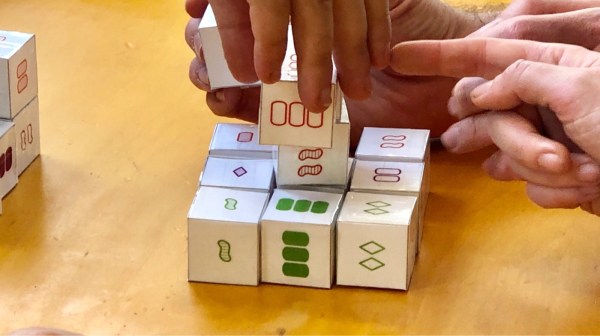
A walk-through of my workshop that connects geometry to the Game of SET.

A task format to elicit strategic thinking, emphasise understanding and encourage discussion.

Does a correct answer mean that students understand?

Motivating an exploration of numbers with a 'Which One Doesn't Belong?' prompt.

A recap of the books I read in 2018.

How do you curate and consume your educational reading list?
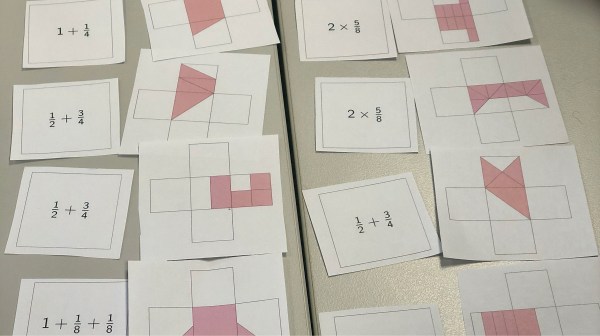
Another take on one of my favourite tasks.

A playful prompt to discover how students feel about mathematics.

Reflections on my experience at Twitter Math(s) Camp.
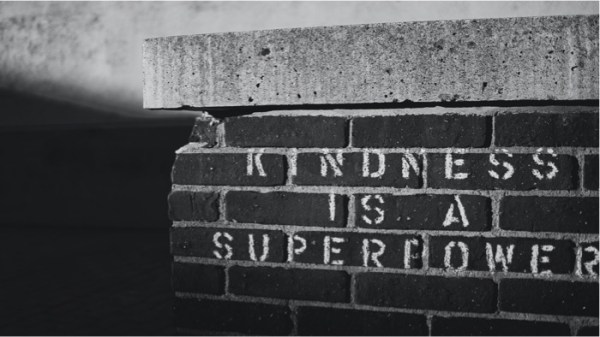
What can you do today to show your students a little more kindness?

A recap of the books I read in 2017.

Six activities focused on reasoning with quadrilaterals.

A Pythagorean lesson starter that threatened to take over the lesson.

A hands-on version of one of my favourite logic puzzles: skyscrapers.

Building community in the classroom with an exploration of Prime Climb.
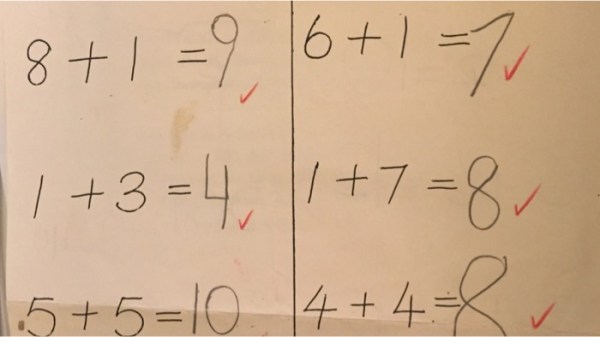
What is your story with maths?

Using Notice and Wonder to lower the barrier to entry of mathematical concepts.

Making sense of a collaborative and fun mathematical activity with Notice and Wonder.

A plea to share our failures as well as our successes.
 Wonder in Mathematics